
Low delivery can come from a blocked inlet, excessive pipe resistance, falling openwell water level, voltage loss, wrong rotation or worn hydraulic parts. By recording the actual flow, water levels, running voltage and installation details, you can separate a pump fault from a system fault before paying for repairs or replacement.
Key takeaways
- Measure litres per minute before replacing pump parts.
- Clear the openwell, inlet strainer, delivery pipe and non-return valve.
- Use the Kosi 135 pump curve to compare head, flow and operating conditions.
- Arrange service when electrical readings, vibration or repeated trips indicate a deeper fault.
Measure the shortfall before changing any parts
A low outlet stream does not prove the pump is faulty. Confirm the shortfall by measuring flow into a container over a timed interval, then compare the result with the pump’s complete nameplate data and operating conditions.
- Record the model code, rated power, voltage, phase, frequency, rated current, speed, discharge size, and rated head and flow. “Kosi 135” alone does not identify the correct performance curve.
- Run the pump under normal conditions and fill a container of known volume. Measure the time in seconds, calculate litres per minute, and repeat the test twice.
- Measure supply voltage and running current at the pump terminals. Note the static water level before starting and the running level while pumping; a falling level can expose the pump to air or reduce immersion.
- Record delivery pressure, or measure the vertical lift from the water surface to the outlet. Write down pipe diameter, approximate length, elbows, valves, filters, and the outlet elevation.
- Photograph the gauge and nameplate, and note whether the loss appeared suddenly or developed gradually. A sudden drop points toward blockage or breakage; gradual decline fits wear, drawdown, or increasing resistance.
These readings turn a kosi 135 water pump problem into a measurable comparison. An outlet viewed by eye cannot separate low pump capacity from a blocked pipe, excessive head, well drawdown, or low voltage. Do not change parts until those baseline figures are recorded.
Check the openwell, inlet and delivery path
A normally spinning Kosi 135 can still deliver little water when the restriction is in the water path. First identify the installation: a true submersible pump does not need surface priming, while a surface, non-submersible openwell pump can lose flow through an air leak or incorrect priming.
For an openwell submersible water pump low output problem, watch the water level while it runs; if the pump loses immersion, it can draw air, overheat or trip.
Check these physical points before changing the motor:
- Clean the inlet screen and confirm the pump is not resting in mud, silt or floating debris.
- Open the delivery valve fully. Inspect the foot valve, strainer and filter for blockage.
- Follow the hose or pipe for kinks, crushed sections, leaks and loose threaded joints.
- Look for an air lock at high points, especially after draining or reconnecting the line.
- Compare the installed pipe with the required flow; a long, narrow, scaled pipe and many elbows create heavy resistance.
| Fault or observation | What it means | Check |
|---|---|---|
| Low flow with bubbles | Air entering the inlet or an air lock | Tighten joints and vent high points |
| Strong motor, weak outlet | Blocked valve, filter, screen or delivery pipe | Isolate and flush each section |
| Flow falls as the well empties | Pump is losing immersion | Measure water level while running |
| Water leaks along the route | Part of the discharge never reaches the outlet | Inspect every joint and hose section |
Use the pump curve, not the outlet size, to judge performance
Judge the pump against its operating point, not the outlet diameter. A larger outlet does not prove that the pump can deliver more water, and a normal motor sound does not prove that the installation has acceptable flow.
For a kosi 135 water pump low water supply in nagpur complaint, record the complete nameplate data before using a curve: model code, power, voltage, phase, frequency, current, speed, discharge size, rated head and rated flow. “Kosi 135” alone is not enough to identify the correct performance curve.
Calculate total dynamic head from the installation:
- Static lift: the vertical distance from the running water level to the delivery point.
- Friction loss: resistance from pipe length, narrow diameter, elbows, valves, filters and partly closed outlets.
- Delivery elevation: any rise after the pump before water reaches the tank or tap.
Measure the water level while the pump runs, not only before starting it. If the openwell level falls and the pump loses immersion, it can draw air, lose cooling and reduce delivery. A falling level increases the effective lift.
Read the curve at your total dynamic head and compare its predicted flow with the timed container measurement. Maximum head and maximum discharge occur at different points; you cannot expect both ratings together.
A long 25-millimetre pipe with several bends can move the operating point far below the rated-flow condition, even when the pump is undamaged. A blocked screen or valve adds further resistance.
Match motor symptoms to electrical and mechanical faults
A motor symptom narrows the search, but it does not identify the failed part by itself. Switch off the supply before touching wiring, and do not keep resetting thermal protection; repeated trips can damage the motor and create a shock or fire hazard.
- If it trips, check for dry running, insufficient immersion, blocked cooling flow, low running voltage, too many starts, a seized bearing or an overloaded hydraulic condition. A larger pump will not correct these faults.
- If it hums but does not start, check the single-phase capacitor and supply voltage. The replacement must match the specified capacitance, voltage rating and capacitor type; a similar-looking part is not a dependable substitute.
- If it overheats, measure running voltage and current, then check the capacitor, bearing condition, water level, cooling path and discharge restriction. Stop operating it until the cause is found.
- If it vibrates, inspect the mounting, coupling or shaft, bearings and impeller. A broken, unbalanced or sand-eroded impeller can cause vibration as well as reduced delivery.
- If it runs smoothly but delivers little water, inspect the impeller, diffuser and inlet screen for blockage or wear. A sudden loss points toward a blockage or break; gradual decline fits abrasive wear.
- If it is three-phase, have a qualified person check phase sequence after rewiring. Reversed rotation can produce very low discharge, and swapping phases is not a diagnostic method for a single-phase motor.
Record voltage, current and water levels before arranging service. Include pipe diameter, approximate length and measured flow.
Know when measurements call for professional service
A trip, burning smell, electric shock, damaged cable, unstable terminal voltage, or repeated overheating requires an electrician before further testing.
Call a pump technician when the running water level falls below the pump’s required immersion depth, flow remains low with adequate voltage, the unit vibrates or grinds, or water returns through the delivery line after shutdown.
| Finding | Who to call | What it suggests |
|---|---|---|
| Motor trips, hums, overheats, or has damaged wiring | Electrician | Supply fault, loose joint, cable damage, or overload |
| Three-phase motor runs with very low discharge after rewiring | Qualified electrician | Incorrect phase sequence or reversed rotation |
| Water level drops below the pump while running | Pump technician | Drawdown, air entry, poor cooling, or thermal cut-out |
| Correct voltage and water level but low flow with vibration or noise | Pump technician | Blocked screen, worn impeller, bearing damage, or mechanical fault |
| Line loses water after shutdown | Pump technician | Leaking non-return valve, leaking joint, or loss of prime |
For kirloskar water pump service in nagpur, give the technician measured flow, voltage and current at the motor terminals while running, static and running water levels, pump immersion depth, pipe diameter, approximate pipe length, vertical lift, number of elbows and valves, and the date of the last repair.
Send a photo of the nameplate, control panel and pipe connections. Nagpur Agricultural Equipment Engineers Pvt. Ltd. can use these details to separate a pump fault from voltage drop, well drawdown or installation losses.
Related products
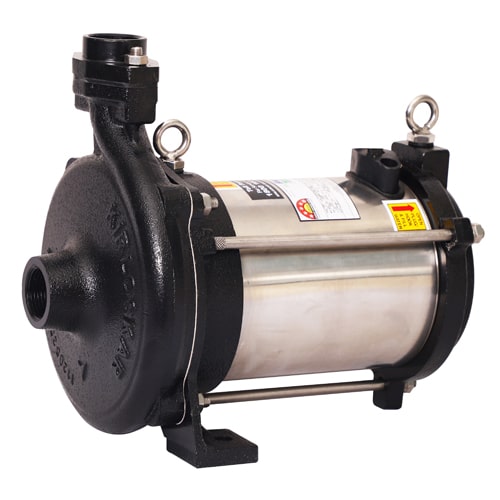 | kirloskar pump ₹8829 Kirloskar KOS i 135 •Domestic and Community Water Supply •Gardening and Small Farm Irrigation •Water Fountains •Construction Site •Water Supply to... View product → |
 | Kirloskar Openwell Submersible Pumps Kriloskar KOSI-135 Openwell Submersible Pump ₹8800 Description Model:KOSI-135 Head:100 Feet View product → |
Frequently asked questions
How do I confirm that my Kosi 135 water pump has low output?
Collect the outlet water in a container for a timed interval, calculate litres per minute, and compare the result with the pump nameplate and operating conditions.
What should I check when an openwell submersible water pump has low output?
Inspect the openwell water level, inlet strainer, suction or inlet path, delivery pipe, bends, valves and non-return valve for blockage, leakage or excessive restriction.
Why is the outlet size not enough to judge Kosi 135 pump performance?
Pump output depends on total head, pipe losses, voltage, motor speed and the pump curve, not the outlet diameter alone.
When does a Kosi 135 water pump problem need professional service?
Request service when the motor trips, draws abnormal current, overheats, vibrates, makes unusual noise, leaks, or still delivers low flow after the water path is clear.
Keywords