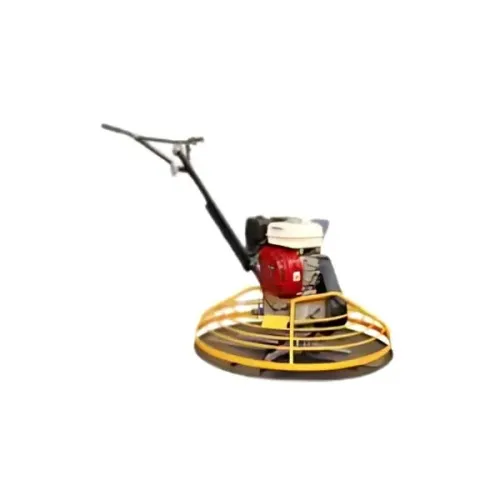
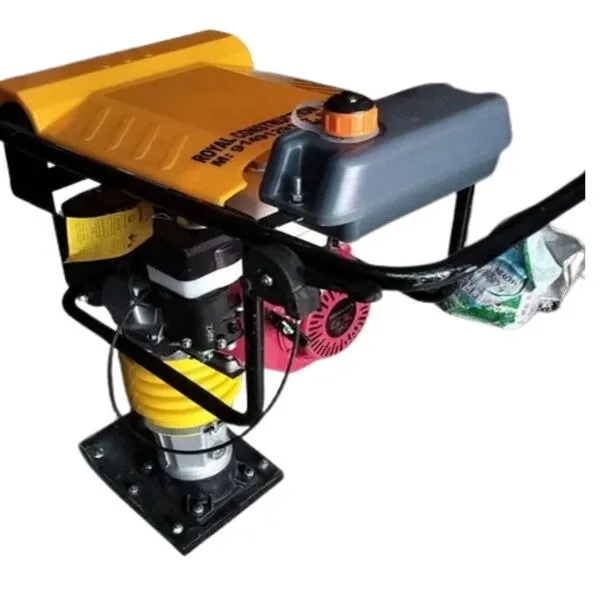
Rammers and plate compactors are both used to increase ground density, but they are not interchangeable in every situation. Selecting the wrong machine can slow the work, leave sections inadequately compacted, or make operation unnecessarily difficult.
Nagpur Agricultural Equipment Engineers Pvt. Ltd supplies equipment for construction and infrastructure-related work in Nagpur. Contractors can make a more informed selection by comparing the working space, soil composition, project scale, and required compaction action.
Check the Soil Type
The first question is whether the material is predominantly cohesive or granular.
Cohesive soils contain fine particles that bind together, with clay being a common example. These materials often respond well to the concentrated impact and vertical force of a rammer.
Granular materials such as sand, gravel, and crushed aggregate contain separate particles with limited natural bonding. A plate compactor uses vibration and a wider contact area to rearrange these particles and reduce empty spaces.
When the site contains mixed soil, a field assessment may be necessary before equipment is selected.
Measure the Available Working Space
A rammer has a relatively narrow foot and upright design. It can operate effectively in trenches, around foundations, beside pipelines, and in other restricted areas.
A plate compactor covers a wider surface with each pass. It is generally more productive on open areas such as driveways, pathways, paving bases, and floor preparation.
Use this simple distinction:
- Choose a rammer for narrow and confined spaces.
- Choose a plate compactor for broader and relatively level surfaces.
- Reassess the choice if soil conditions conflict with the available space.
Some projects may require both machines for different sections of the same site.
Consider the Required Manoeuvrability
Rammers are useful where the operator must work between obstacles or along narrow excavations. Their movement requires proper balance and control, especially on uneven ground.
Forward plate compactors are straightforward for smaller open-area applications. Reversible models can move in both directions, which may improve manoeuvrability and compaction efficiency on larger or more demanding sites.
The machine should fit comfortably within the work zone without striking walls, services, formwork, or structural components.
Evaluate Surface Finish Requirements
For paving blocks and landscape surfaces, a plate compactor generally provides broader and more uniform coverage. Appropriate protective accessories may be required to reduce the risk of marking finished pavers.
A rammer delivers repeated impact over a smaller area. It is valuable for trench backfilling and foundation-related work but may not be the most efficient choice for creating a smooth, extensive paving base.
Review Layer Depth and Material Condition
Neither machine can correct poor filling practices on its own. Material should be spread in suitable layers and maintained at an appropriate moisture level.
Before beginning, verify that:
- The base is free from organic material
- Each layer has a consistent depth
- Standing water has been removed
- The selected machine suits the soil
- Operators understand the movement pattern
- Edges and corners are included in the plan
- The required number of passes has been determined
Site testing may be needed when compaction must meet an engineering specification.
Account for Nagpur’s Working Conditions
Nagpur’s hot summers can increase dust and place additional demands on engines and air filters. During the monsoon, saturated soil may become unsuitable for immediate compaction. Operators should inspect filters, fasteners, fuel lines, and the compaction foot or plate before use.
Rammers and compactors should be cleaned after each shift, particularly when working with damp or sticky soil.
The right machine improves productivity because it matches the material and working area. Contractors planning trench, paving, foundation, or repair work can consult Nagpur Agricultural Equipment Engineers Pvt. Ltd to compare rammer and plate compactor options based on actual site conditions.
Keywords