

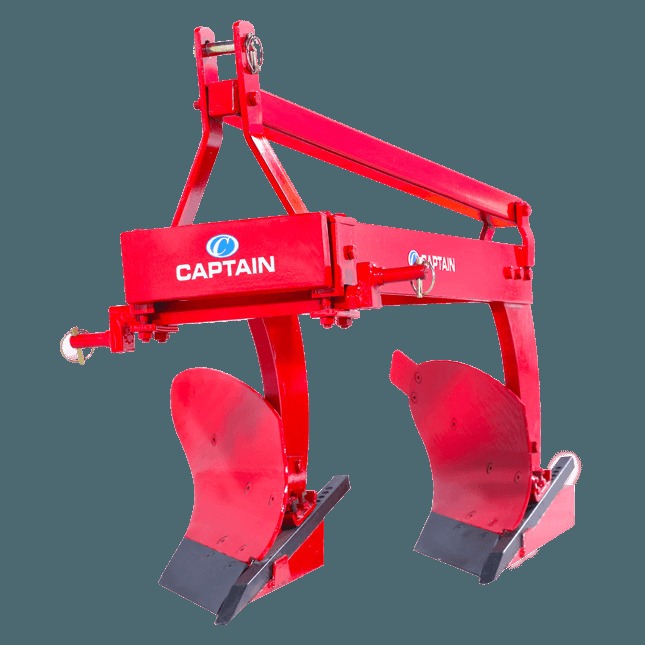
Plough
A tractor-mounted implement used for deep tilling and primary tillage, which can turn soil in two directions. Forward pass: The tractor pulls the plough down one side of the field, and the mouldboard turns the soil to the right. Turnover at the end: At the end of the field, the operator activates the hydraulic or mechanical system to reverse the plough's position. Return pass: The tractor moves down the adjacent strip, and the plough now turns the soil to the left, back into the previously ploughed area. This process eliminates the need for dead furrows (unploughed trenches) and back furrows (double-ploughed ridges), which are common with non-reversible ploughs. The reversible MB plough offers several advantages over traditional ploughs: Improved soil fertility: It completely inverts the soil, burying weeds, crop stubbles, and farmyard manure deep underground. These materials decompose, adding nutrient-rich humus to the soil. Better soil health: By turning the soil, it improves aeration, helps with water drainage, and exposes the sub-surface to sunlight, which kills harmful bacteria and fungi. Reduced soil compaction: The level field produced by a reversible plough, along with consistent tillage depth, reduces soil compaction issues. Enhanced efficiency: Its two-way operation eliminates unproductive turns at the headlands, saving time and fuel. This can lead to greater field coverage and reduced operating costs. Optimal seedbed preparation: It consistently produces a level and well-prepared surface, creating an ideal environment for seed sowing.