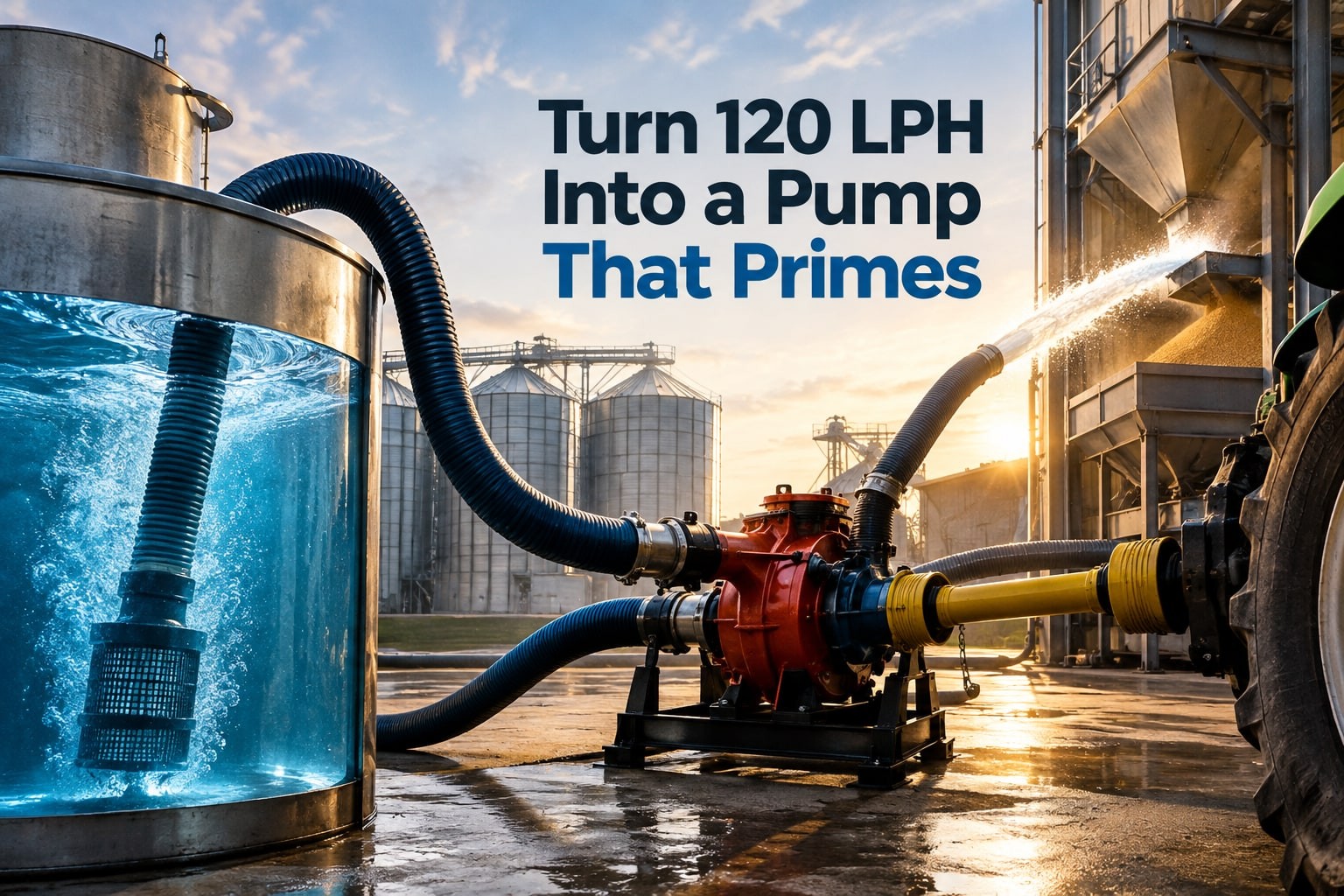
A tractor-driven pump that fails at a grain plant can have a PTO, priming, suction, discharge, water-source or sizing fault rather than a defective impeller. You will be able to identify the duty point, check the tractor and installation, match symptoms to tests, and prepare the measurements needed for an effective repair decision.
Key takeaways
- Specify flow at total dynamic head, not the 120 LPH maximum.
- Check suction leaks, foot valves and pipe layout before replacing the pump.
- Match tractor PTO speed and horsepower to the pump’s operating point.
- Stop unsafe equipment and record pressure, flow and symptoms for diagnosis.
Turn the unexplained 120 LPH claim into a usable duty point
Use flow at a stated total dynamic head (TDH), not the advertised 120 LPH maximum, to specify a pump. 120 LPH equals 2 L/min: a dosing-scale figure, not a credible washdown, tanker-filling or dust-suppression duty unless the plant truly consumes that amount.
Treat it as a typographical error, a zero-head maximum, or a measurement at an unstated head until the supplier provides evidence.
Measure each outlet’s demand in L/min, then add only the outlets operating simultaneously. TDH includes elevation, suction lift, pipe friction, elbows, valves, filters and the pressure required at the outlet; 10.2 m of water is approximately 1 bar.
A tractor driven water pump for grain processors must deliver the required flow at that TDH and at the tractor’s available PTO speed.
| Plant duty | Flow against TDH | Record before selecting |
|---|---|---|
| Cleaning or washdown | L/min at calculated TDH | Hose or spray-nozzle demand, pipe diameter and length |
| Boiler makeup or cooling | L/min at calculated TDH | Equipment inlet pressure and elevation |
| Dust suppression | L/min at calculated TDH | Nozzle count, nozzle pressure and operating duration |
| Tanker filling | L/min at calculated TDH | Tank volume, fill time and delivery-line losses |
- Ask for a pump curve or duty table showing flow against head, recommended PTO speed, suction limit, maximum solids size, seal material, service intervals and spare-part availability.
- Record the water source, pipe sizes, lengths, elevation change, observed pressure and flow.
- Reject any selection based only on tractor horsepower or maximum flow at zero head.
- Separate clean water from water containing husk, sand, grain dust or fibrous waste; those solids can wear or block a clean-water pump.
Size the pump and tractor for the plant duty
Choose the pump from its duty point: the required flow at total dynamic head (TDH), not the tractor’s horsepower or the pump’s maximum flow. TDH combines elevation, suction lift, pipe friction, elbows, valves, filters and outlet pressure. Ask for a pump curve showing flow against head at the recommended PTO speed.
| Plant duty | What to calculate | Pump selection check |
|---|---|---|
| Cleaning or washdown | Peak litres per minute and hose pressure | Curve must meet flow at working pressure |
| Boiler or steam supply | Required feed flow, pressure and water temperature | Confirm pressure rating, seal material and continuous-duty limit |
| Dust suppression | Nozzle flow, operating pressure and number of nozzles | Include nozzle pressure and simultaneous use |
| Cooling circuit | Circulation flow, temperature and circuit resistance | Check continuous hours and heat-resistant seals |
| Tanker filling | Tank volume, target filling time and lift | Select flow at the actual delivery head |
Before buying, record the water level, suction-lift or flooded-suction condition, pipe diameter and length, elevation change, PTO speed, measured pressure and flow. Compare these figures with the curve, then check maximum solids size, seal material, service intervals and spare-part availability.
Separate clean water from wash water containing husk, sand, grain dust or fibres. Abrasive solids wear impellers and wear plates; fibres block strainers. A fine suction strainer can starve the pump and cause cavitation, so match its mesh and open area to the solids load and clean it on schedule.
The phrase “doctor tractor for water pump problems grain processing in nagpur” is not a sizing standard. Use measured duty data instead.
Install the suction and delivery lines so the pump can prime
A suction line must stay airtight and resist collapse under vacuum. Use the largest practical diameter, keep it short and straight, and route it continuously uphill to the pump so trapped air cannot form a high point. Ordinary soft delivery hose can flatten on the inlet side and starve the pump.
- Fit a vacuum-rated suction hose with reinforced ends. Seal threaded joints with suitable thread sealant, tighten clamps evenly, and support the hose so its weight does not pull fittings apart.
- Place a foot valve at the submerged inlet to hold water during shutdown. Keep the inlet well below the lowest pumping water level and above mud or settled grain; a loose or blocked foot valve causes repeated loss of prime.
- Fit a strainer sized for the solids load, with generous open area. A fine or dirty screen creates suction loss, cavitation and pulsating flow, so clean it on a defined schedule.
- Install a priming plug or fill port at the pump casing, then fill the casing and suction hose before starting. Do not run the pump dry while waiting for water.
Use an isolation valve and pressure gauge on the delivery side, plus a check valve where backflow could drain the system. Keep the delivery pipe supported and free of kinks. If prime still disappears, test suction joints, the mechanical seal, water level and actual suction lift before replacing the impeller.
Match each pump symptom to a field test
A no-flow complaint needs separation before repair: test the PTO transmission, pump prime, suction line, discharge line and water source. Record PTO speed, static and pumping water levels, suction lift, discharge pressure and measured flow; useful doctor water pump troubleshooting depends on these readings.
- No delivery: Confirm the PTO shaft rotates at the specified speed, open the delivery valve, fill the casing, and check whether the foot valve holds water. A sound pump cannot lift water through an air leak or empty suction line.
- Repeatedly loses prime: Close the delivery side, fill the pump, and watch for falling water level. Inspect threaded joints, clamps, mechanical-seal leakage, foot-valve seating, suction-inlet submergence and suction-lift height.
- Low pressure or flow: Compare a pressure-gauge reading and timed bucket or flow-meter result with the duty point. Check a collapsed suction hose, blocked strainer, partly closed valve, worn impeller and insufficient PTO speed.
- Vibration: Stop the PTO and inspect mounting bolts, shaft alignment, coupling, bearing play and pipe strain. Uneven flow or cavitation points to starvation.
- Overheating: Measure casing temperature after shutdown and check for closed valves, dry running, blocked passages, bearing friction and excessive PTO speed.
- Leakage: Identify whether water comes from a flange, threaded joint, casing gasket, drain plug or mechanical seal; retightening cannot cure a damaged seal face.
- Abnormal noise: Listen for grinding, rattling or gravel-like cavitation, then check bearings, impeller clearance, trapped air and a dirty or overly fine strainer.
Protect people and arrange a measured service diagnosis
Do not approach a PTO shaft until the tractor is in neutral, the PTO is disengaged, the engine is stopped, the key is removed and every rotating part has come to rest. Fit the PTO shaft guards and tractor master shield before operation; keep hands, tools and loose clothing away from the driveline.
Depressurise the delivery line and isolate the water source before clearing a blockage or opening the pump.
1. Record the pump model, serial number, tractor PTO speed, hours run, last service date, seal or bearing replacements, blockage history and the exact symptom. Note whether the pump fails to prime, loses flow, overheats, leaks, vibrates or makes abnormal noise.
2. Measure static water level, pumping water level, suction lift or flooded-suction condition, discharge pressure and actual flow. Also record suction and delivery pipe diameters, lengths, elbows, valves, filters, elevation change and water temperature.
3. Ask for the pump curve or duty table, recommended PTO speed, maximum solids size, seal material, service intervals and available spares. Do not select it from a maximum-flow figure alone; a large tractor engine does not prove adequate flow at the required head.
For agricultural water pump service in Nagpur, Nagpur Agricultural Equipment Engineers Pvt. Ltd. can assess the pump against these recorded field conditions rather than replacing parts by guesswork. Keep the diagnosis sheet with the pump’s maintenance file so a future technician can separate PTO, tractor, pipework, water-source and pump faults.
Related items
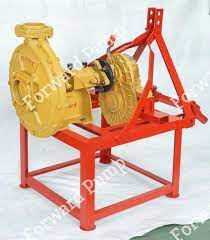 | Tractor Pumps Doctor Tractor Driven Water Pump ₹45000 Doctor Tractor Driven Water Pump View product → |
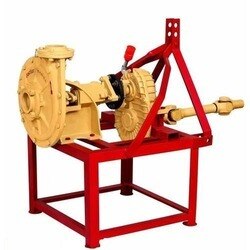 | Doctor Tractor Driven Pumps Doctor Tractor Driven Pumps Power Source Electric Pump Type Rotary Pump Maximum Discharge Flow 120LPH Motor Speed (RPM) 600 Efficiency 85 % Cooling Method Air Cooled Motor... |
Frequently asked questions
What does a 120 LPH water-pump claim mean for a grain plant?
It means 120 litres per hour, or 2 litres per minute, at an unstated condition. Specify the required flow at total dynamic head before choosing the pump.
How do you size a tractor-driven water pump for grain processing?
Define the required litres per minute, vertical lift, pipe length, fittings and outlet pressure. Use these to calculate total dynamic head, then match the pump curve and tractor PTO horsepower.
Why will a tractor-driven water pump not prime?
Check for air leaks on the suction side, a damaged or dirty foot valve, excessive suction lift, blocked strainers and an incorrect pump rotation direction. Fill the casing and suction line when the pump design requires manual priming.
Which tests help diagnose tractor water-pump problems?
Measure suction and discharge pressure, timed flow, PTO speed, engine load and whether the pump loses prime. Compare the readings with the pump curve and inspect seals, bearings, impeller and valves.
Related product
 | Doctor Tractor Driven High Head Pump (105 Meters) ₹56500 Tractor Driven Water Pump Head : 105 Mtrs. Suction : 3 Inches 80 mm Delivery : 2 1/2 Inches 65 mm Gear Box Type With Tractor Attachments and PTO View product → |
Keywords